
Air India grounded a Boeing 787-8 after a pilot reported a potential fuel control switch defect. The incident occurs amidst an ongoing investigation into the airline's Dreamliner crash last June.

Pinky Mali was an attendant on the Learjet 46, operated by Delhi-based VSR Ventures, that crash-landed at the Baramati airport

After West Bengal Chief Minister Mamata Banerjee stated that the truth would not emerge through existing mechanisms and called for a probe, several opposition leaders including Congress President Mallikarjun Kharge backed her demand.

A Bengaluru-bound IndiGo Airlines flight with 216 passengers made an emergency landing in Varanasi after a bird strike. All passengers were safely evacuated.

The aviation regulator stated that the "primary cause" of the disruptions was IndiGo's failure to make "adequate arrangements" to meet the revised staffing, duty-time and rostering requirements under the newly implemented Flight Duty Time Limitations scheme.
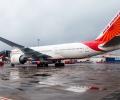
Aviation regulator DGCA plans to implement measures to control excessive air ticket price increases, following concerns raised during a parliamentary panel meeting. The meeting also addressed air safety issues in light of the Ahmedabad plane crash.
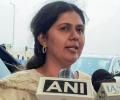
A technical snag was detected in a helicopter scheduled to transport Maharashtra Minister Pankaja Munde for campaigning, delaying her journey. The issue was discovered during a routine inspection, leading to the grounding of the helicopter and a DGCA investigation.
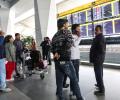
IndiGo is operating 1,650 flights of its 2,300 daily domestic and international flights on Sunday, and 650 remain cancelled for the day, amid the airline's operations gradually stabilising after massive disruptions in the last five days, the airline said.

24 Indian-flagged vessels with 677 Indian seafarers were currently located west of the Strait of Hormuz, and four vessels with 101 Indian seafarers were stationed east of the strategic waterway.

Dubai's core promise -- that it is an oasis untouched by regional storms -- has been tested in full public view. The coming months will show whether investors view the attacks as a short-lived disruption or a deeper signal of lasting risk, points out Asif Ullah Khan.
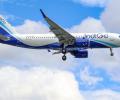
'During the meeting with DGCA on Monday, IndiGo assured operational stability and no flight cancellations after February 10, 2026, based on the current approved network, above (sufficient) crew strength.'

A bench of Justices Vikram Nath and Sandeep Mehta termed the exorbitant rise of airfares by airlines as "exploitation" and asked the Centre and the Directorate General of Civil Aviation (DGCA) to file their replies to a PIL seeking binding regulatory guidelines to control the unpredictable fluctuations in airfare and ancillary charges imposed by private airlines in India.
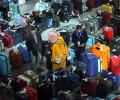
Aviation regulator DGCA intensifies scrutiny of IndiGo following widespread flight cancellations. The airline will offer travel vouchers to affected passengers.
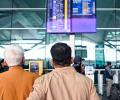
Aviation safety regulator Directorate General of Civil Aviation (DGCA) on Monday said it has received IndiGo's response to the show cause notice issued over the large-scale flight cancellations and will take enforcement action.
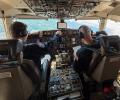
The principal problem lies in lack of training infrastructure and relatively lax safety standards.
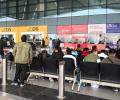
The board of InterGlobe Aviation, the parent of IndiGo, has already set up a crisis management group in the wake of the significant operational disruptions that started on December 2.

Equity markets fell on Monday, with benchmark indices recording their worst session in over two months amid caution ahead of the US Federal Reserve's (Fed's) policy announcement and renewed uncertainty over the US-India trade deal. Sustained selling by foreign portfolio investors (FPIs) also weighed on sentiment.

Rourkela SP Nitesh Wadhwani said there were four passengers, including two women and two pilots, in the aircraft. Captain Naveen and Captain Tarun were piloting the plane, he said.
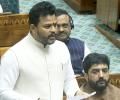
Civil Aviation Minister Ram Mohan Naidu addressed the Lok Sabha regarding the recent IndiGo flight disruptions, assuring that the airline will be held accountable and strict action will be taken for non-compliance and passenger hardship.

Aviation regulator Directorate General of Civil Aviation (DGCA) on Tuesday said Air India's Boeing 787-8 Dreamliner, which faced fuel control switch glitch, took off from London on February 1 after the crew carried out a physical check of the switch and that no abnormal parameters were observed during start of the engine or thereafter.
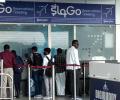
Fair trade watchdog Competition Commission of India (CCI) is examining whether the country's largest airline, IndiGo, violated competition norms, a senior official said on Friday amid the carrier facing regulatory scrutiny over significant flight disruptions.

The cost of any flight from Delhi and Mumbai could rise by up to Rs 3,000 soon unless the airport regulator is able to reverse a court order.
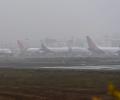
According to the latest data from the aviation regulator DGCA, IndiGo and Air India did not cancel any flights, while Air India Express cancelled four flights due to the system modification process.
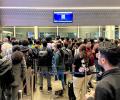
Domestic carrier IndiGo has cancelled over 180 flights from three major airports on Thursday, as the Gurugram-based airline struggles to secure the required crew to operate its flights in the wake of new flight-duty and rest-period norms for pilots.
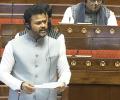
Aviation Minister K Rammohan Naidu said the government has initiated an inquiry into Indigo's mass flight cancellations and will take strict action against the operator to set an example for other airlines.
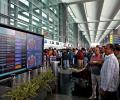
Pilots' body Airlines' Pilots Association (ALPA) India on Friday took 'strong' objection to safety regulator Directorate General of Civil Aviation (DGCA)'s 'selective and unsafe' relief to domestic carrier IndiGo, amid widescale cancellations, saying the decision sets a dangerous precedent.

Indian equities declined on Friday, with the benchmark Nifty posting its worst weekly fall since September, as foreign investor sentiment remained weak amid tepid earnings growth and little progress on the India-US trade front.
India's largest airline IndiGo on Thursday reported a 78 per cent decline in December quarter net profit at Rs 549.1 crore as flight disruptions and implementation of the new labour code took a toll on its earnings. The airline reported a net profit of Rs 549.1 crore in the October-December quarter, compared with Rs 2,448.8 crore earnings in the year-ago period, according to a company statement.

The flights have been cut across sectors, particularly on high-demand, high-frequency routes, according to a DGCA statement.

'The CCI will first need to take a prima facie view on whether IndiGo's role warrants a detailed investigation.'

In another development, aviation safety regulator DGCA in an order on Sunday late evening extended the time by Monday 6 pm for IndiGo CEO Pieter Elbers and Chief Operating Officer and Accountable Manager Isidro Porqueras to submit reply to its show cause notice over the ongoing disruptions in the airline's operations.
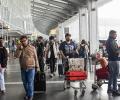
Aviation watchdog DGCA has set up a four-member committee to carry out a comprehensive review and assessment of the circumstances that led to the massive flight disruptions.

Pilots' body the Federation of Indian Pilots (FIP) has alleged that IndiGo, despite getting a two-year preparatory window before the full implementation of new flight duty and rest period norms for cockpit crew, "inexplicably" adopted a "hiring freeze."
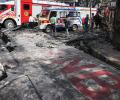
The Supreme Court has raised concerns about the preliminary report on the Air India crash and has asked for a more independent and thorough investigation.
'IndiGo will receive a sharp rap on the knuckles -- a punishment, a huge penalty. 'I look towards them creating a compensation fund.' 'I would like to think they would do that for all the passengers who are affected on every single day since cancellations began.'
Apart from the Flight Duty Time Limitations (FDTL) exemptions, the regulator has provided certain other relaxations that will help IndiGo have more pilots for duty to reduce the disruptions and normalise operations.
According to sources, the crisis-ridden airline cancelled 137 flights at Delhi airport and 21 services at Mumbai airport.

GPS spoofing occurs when fake satellite signals are transmitted to an aircraft's navigation system, confusing pilots or onboard systems about the plane's actual position or altitude. Such false signals pose a serious safety risk, especially during landing.

Aviation watchdog DGCA stations personnel at IndiGo's headquarters to monitor flight cancellations, crew deployment, and operational disruptions after thousands of flights were cancelled, causing passenger inconvenience.
The Delhi High Court refused to entertain a PIL seeking compensation for passengers affected by IndiGo flight cancellations, citing an ongoing related case.
 © 2026 Rediff.com - Advertise with us - Disclaimer - Privacy Policy - Sitemap - Feedback - About us - Terms of use - Grievances